

Empowering rural women with disability through AI-powered prosthetic limbs
Posted: 30 July 2026
This year marks the 75th anniversary of Australian Government scholarships for students from the Asia-Pacific region, with the first scholarship recipients travelling to Australia under the Colombo Plan in 1951. To commemorate this significant milestone, Australia Awards – South Asia & Mongolia launched the Alumni Impact Storytelling Competition to celebrate the outstanding contributions alumni have made to the development of their countries.
The competition invited alumni to showcase the impact they have created and reflect on how their Australia Awards experience has helped shape their personal and professional journeys.
Pakistani alumna Zarqa Khan‘s entry was selected as the winning image storytelling submission for its outstanding use of visual storytelling to bring development impact to life. The images followed the personal journey of Habiba, a rural woman whose life was transformed through access to an AI-powered prosthetic limb, creating a compelling and deeply human narrative. Judges praised the way the entry balanced this individual story with a visually engaging presentation of program results, combining personal experience and measurable impact to demonstrate how Australia Awards learning has contributed to greater inclusion and economic empowerment for women with disabilities in Pakistan.
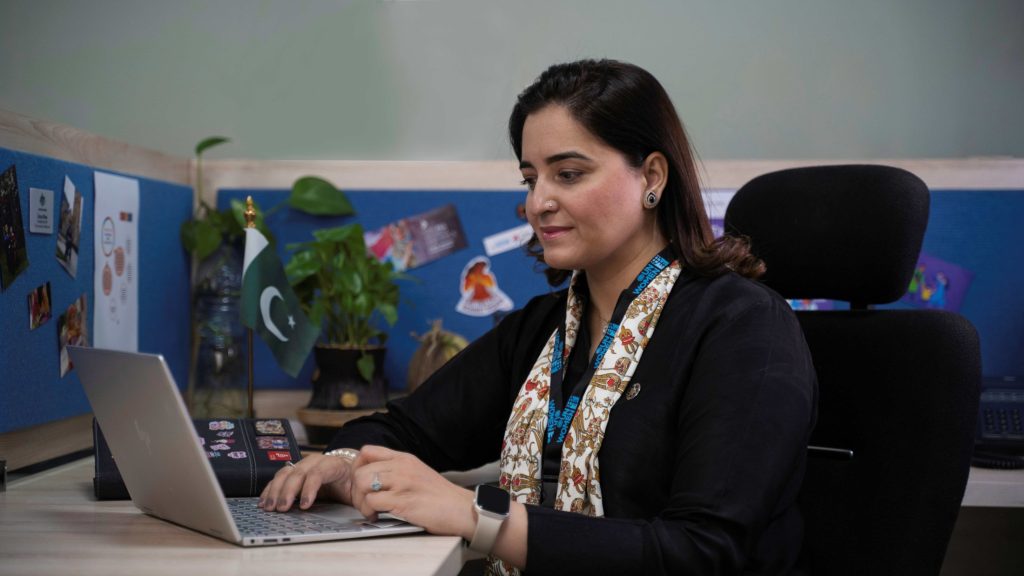
Zarqa photographed at her workplace.
Zarqa completed a Master of Development Studies (Gender and Development) at the University of Melbourne in 2021. Her work was shortlisted for the United Nations Secretary-General’s Awards 2025 under the category of Inclusion of Persons with Disabilities.
The silent crisis: Woman amputee beside a fodder-cutting machine, Sindh
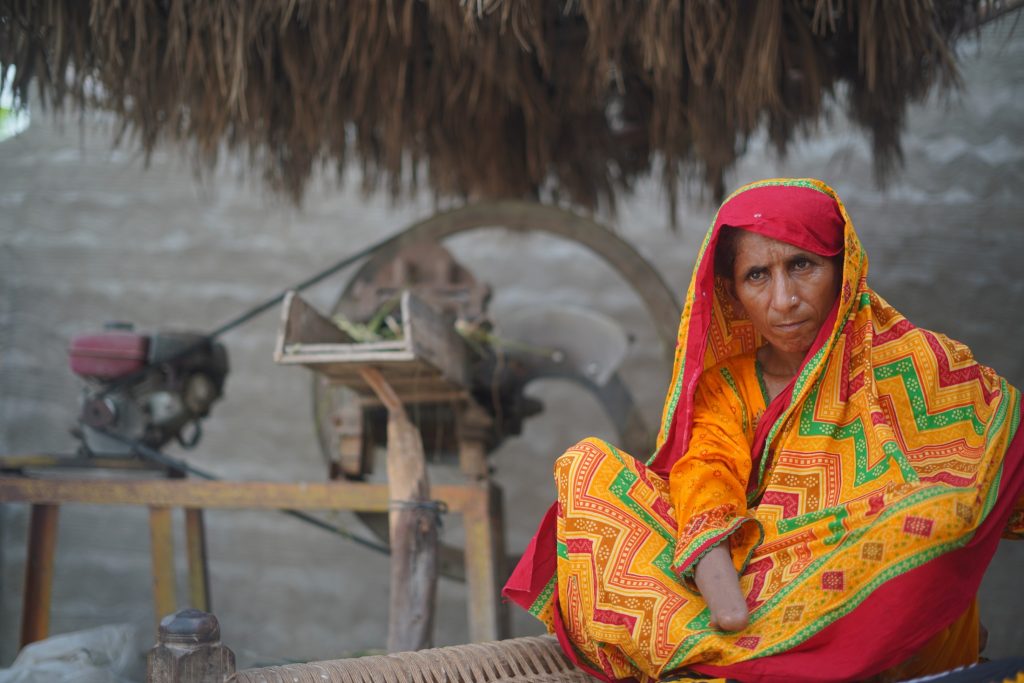
In rural Sindh, a fodder-cutting machine took her arm—and her livelihood with it.
Across rural Pakistan, women are the backbone of agriculture and home-based industry. Yet they are also among the most vulnerable to unsafe machinery—according to a 2015 Professional Medical Journal report, nearly 58 percent of agricultural amputations in the country involve women’s hands and arms. For many, such injuries are not only physical but deeply socio-economic, often resulting in the loss of income, diminished social standing, and exclusion from household and community life. It is this urgent and often overlooked crisis that the initiative I spearheaded at UN Women Pakistan was designed to address.
From Melbourne to Sindh—an alumna’s journey: An Australia Awards Scholarship at the University of Melbourne shaped the gender-and-disability lens behind a national first
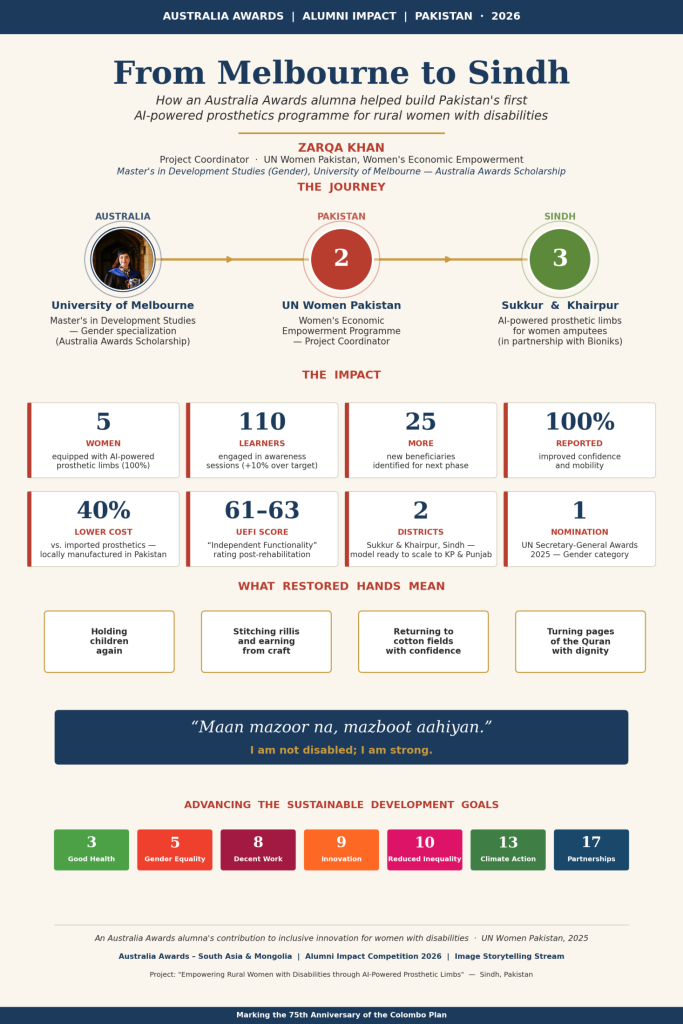
My Master of Development Studies (Gender and Development) at the University of Melbourne, supported by an Australia Awards Scholarship, instilled in me a guiding question for every program: who is being left behind, and why? I carried this perspective into UN Women Pakistan’s Women’s Economic Empowerment Programme, where it helped me shape the design of Pakistan’s first artificial intelligence (AI)-powered prosthetics initiative for rural women with disability. To date, the initiative has equipped five women with prosthetic limbs, trained 110 community members and identified 25 additional women for support in the next phase.
A hand restored: Habiba holding her child after receiving her AI-powered prosthetic limb
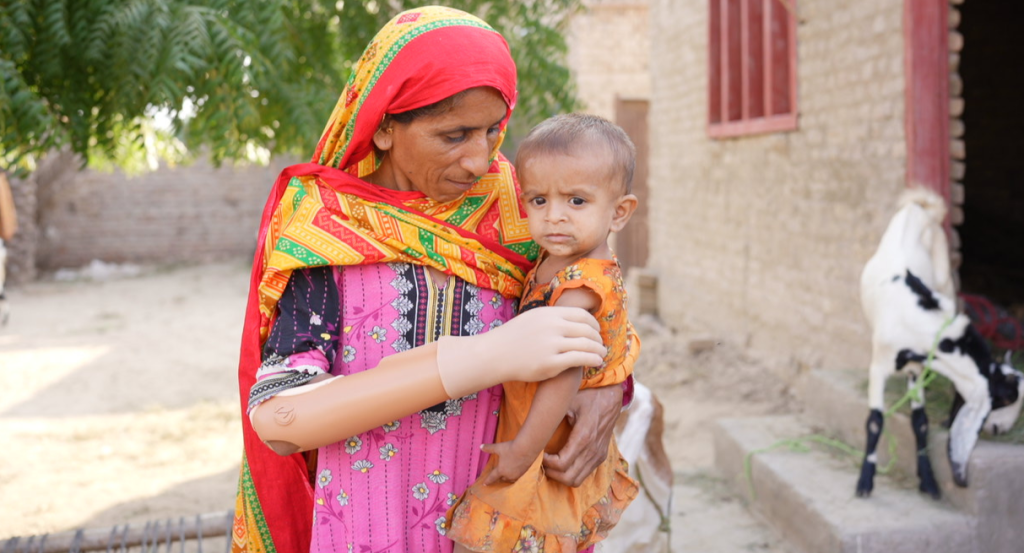
“My greatest joy is that I can now hold my children in my arms again.”
Habiba lost her arm to a fodder-cutter. For months she could not lift, feed or hold her own children. The AI-powered prosthetic she received reads the muscle signals in her residual limb and translates them into movement—and is locally manufactured in Pakistan at 40% of the cost of imported equivalents. Her words on the day she received it remain the project’s clearest measure of success: a hand restored is a mother restored, a household restored, a life restored.
Beyond technology: A peer mentor fitting a prosthetic alongside a new beneficiary
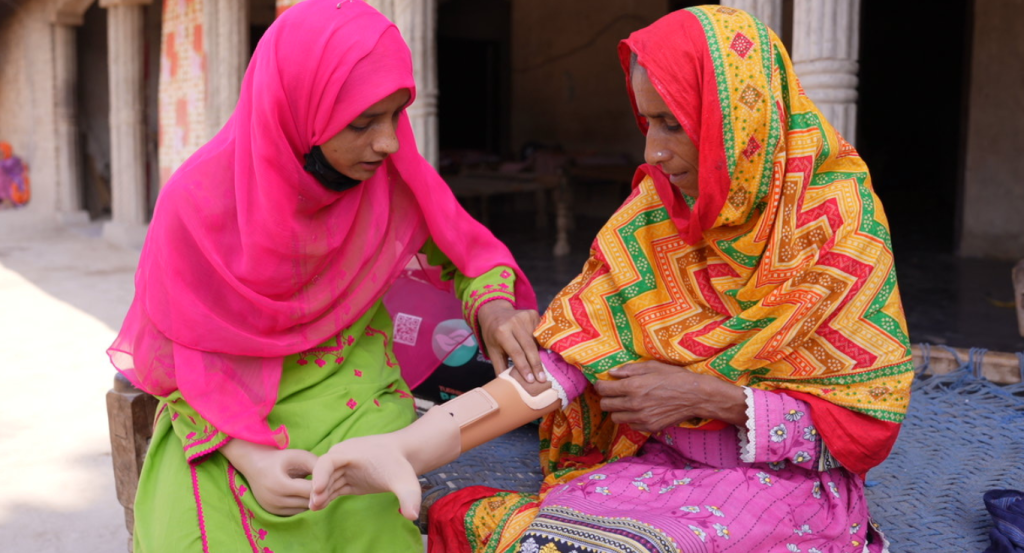
Technology heals the limb. Peer mentorship and counselling heal the rest.
This initiative goes beyond technology. Women support women—through peer mentorship, counselling and shared experiences. Seeing someone like themselves succeed builds confidence and accelerates healing. It is this human connection, combined with innovation, that transforms recovery into empowerment and reintegration into society.
Cotton fields, renewed hope: A group of women with new prosthetic limbs in a Sindh cotton field
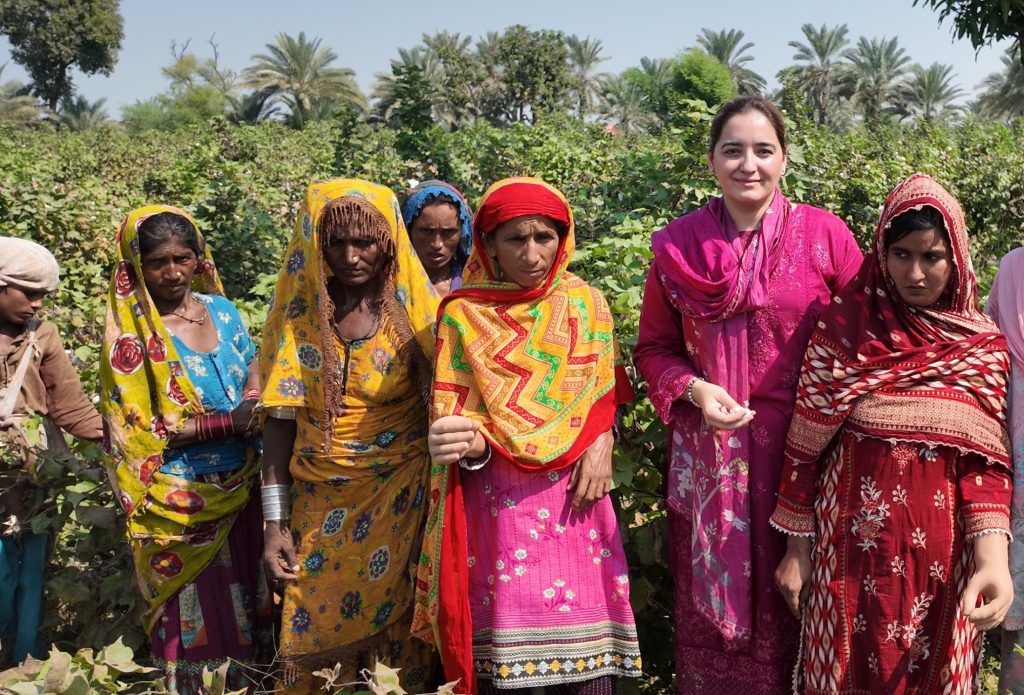
From assistance to agency—a model ready to scale across Pakistan (Zarqa stands second from right).
Back in the fields, back in control of their futures. With restored mobility and renewed confidence, women are returning to agriculture, livelihoods and community life. This is not just recovery—it is transformation at scale. A future where women are not defined by disability, but by strength, resilience and opportunity.
Two districts. Five women. One question answered. The next phase will reach two hundred women across Sindh, Punjab and Khyber Pakhtunkhwa, with regional rehabilitation hubs linked to UN Women’s Resource and Innovation Centres and a national Assistive Technology Policy for Women and Girls in support. The thread that runs from a Melbourne classroom to this cotton field is the same one that has run through every Australia Awards alumna’s career: the conviction that no woman should be left behind by the development she helps build.
These images are shared with Habiba’s consent.