

Alumnus leading inclusive development in Pakistan’s mountain communities
Posted: 9 September 2026
This year marks the 75th anniversary of Australian Government scholarships for students from the Asia-Pacific region, with the first scholarship recipients travelling to Australia under the Colombo Plan in 1951. To commemorate this significant milestone, Australia Awards – South Asia & Mongolia launched the Alumni Impact Storytelling Competition to celebrate the outstanding contributions alumni have made to the development of their countries.
The competition invited alumni to showcase the impact they have created and reflect on how their Australia Awards experience has helped shape their personal and professional journeys.
The judges highly commended Mian Muhammad Shah’s collection of powerful and beautifully composed photographs, which showcase the scale and diversity of the projects delivered throughout his career. From schools and health facilities to roads, bridges and sports complexes, the images provide a vivid illustration of development in action. Collectively, they tell a story of improved access, greater opportunities and an enhanced quality of life for communities across Pakistan.
Below is the story submitted by alumnus Mian Muhammad Shah from Pakistan, who completed a Master of Development Studies at the University of Melbourne in 2014.
When I returned to Pakistan after completing my Australia Awards Scholarship, I carried more than just a degree. I returned with a new way of seeing the world. My time in Australia challenged my assumptions, strengthened my belief in inclusive development and gave me the confidence to lead change in some of the most under-served communities of my country.
Back at the Sarhad Rural Support Programme (SRSP), I stepped into a role where expectations were high. In the communities I served, especially in Khyber Pakhtunkhwa, women’s economic participation was extremely limited. Many women had skills but lacked access to markets, financial resources and even the social permission to step beyond their homes. I knew that real development would not be possible without bringing these women into the economic mainstream.
In 2016, I was given the opportunity to lead the Women Economic Empowerment and Market Development project, funded by the Australian Government. This was more than just a project; it was a chance to translate what I had learnt in Australia into meaningful impact.
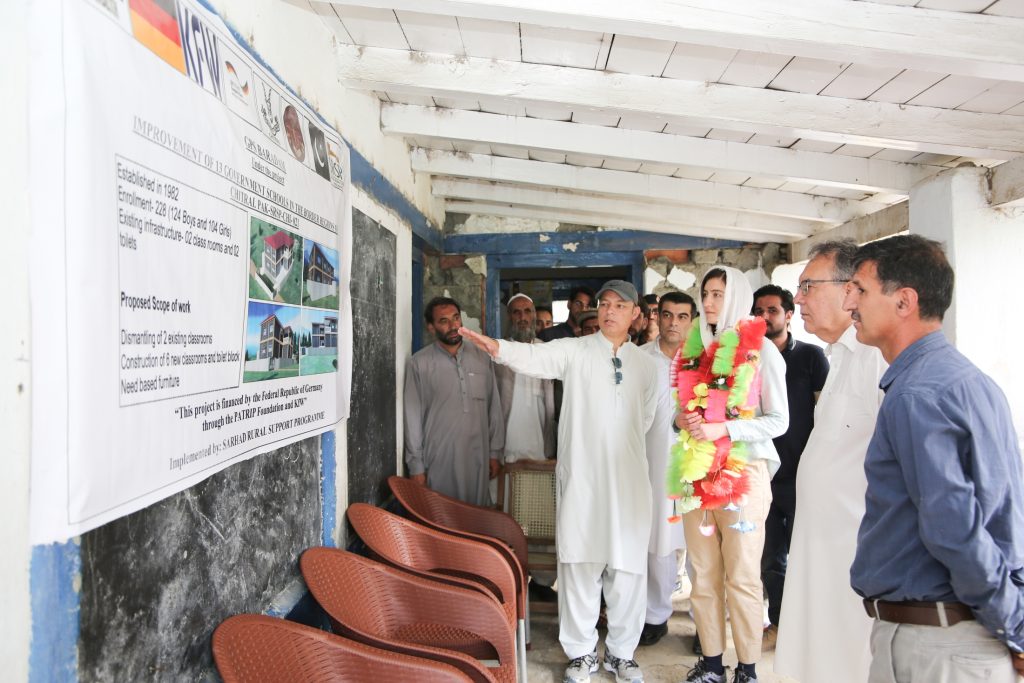
Mian (wearing the grey cap) explaining the project plan during the opening ceremony for the construction of a government primary school in Baradum, Chitral District.
I still remember meeting women who had never earned an income in their lives. They spoke softly, often hesitantly, unsure of their own potential. Through this project, we worked closely with communities to build trust and create opportunities. SRSP introduced village banking systems, provided small grants and delivered practical skills training.
Over time, something remarkable began to happen. Women who had once been confined to their homes began running small businesses. Some started earning enough to support their families, while others became confident enough to train fellow community members. One woman told me, “For the first time, I feel I am contributing to my household.” Moments like these defined the true success of the project.
The initiative reached over 7,700 women, many of whom experienced increased household incomes. Yet beyond the numbers, the real impact was seen in growing confidence, dignity and voice. The Women Business Centres we established became safe spaces where women could learn, connect and grow. These centres continue to operate, supporting local economies and empowering future generations.
This experience reinforced my belief that when women are given the right opportunities, they transform not only their own lives but also their communities.
Since 2017, my journey has continued with even greater responsibility. I now manage a long-term development program supported by the German Government through the PATRIP (Pakistan Afghanistan Tajikistan Regional Integration Program) Foundation, working in some of the most remote and fragile regions along the Pakistan–Afghanistan border, benefiting over 430,000 people.
These regions face multiple challenges, including poverty, isolation and limited access to basic services. I have visited communities where children walked long distances to reach unsafe schools, where healthcare was minimal and where the absence of roads cut people off from opportunities.
Through this program, we have worked to change that reality. Seventy-five government schools have been constructed, providing safe learning environments for thousands of children, especially girls. A sports facility in Kurram district now offers youth a positive outlet in an area often affected by conflict. Health services have improved through the upgrading of seven Basic Health Units and one women’s hospital, benefiting thousands of families.
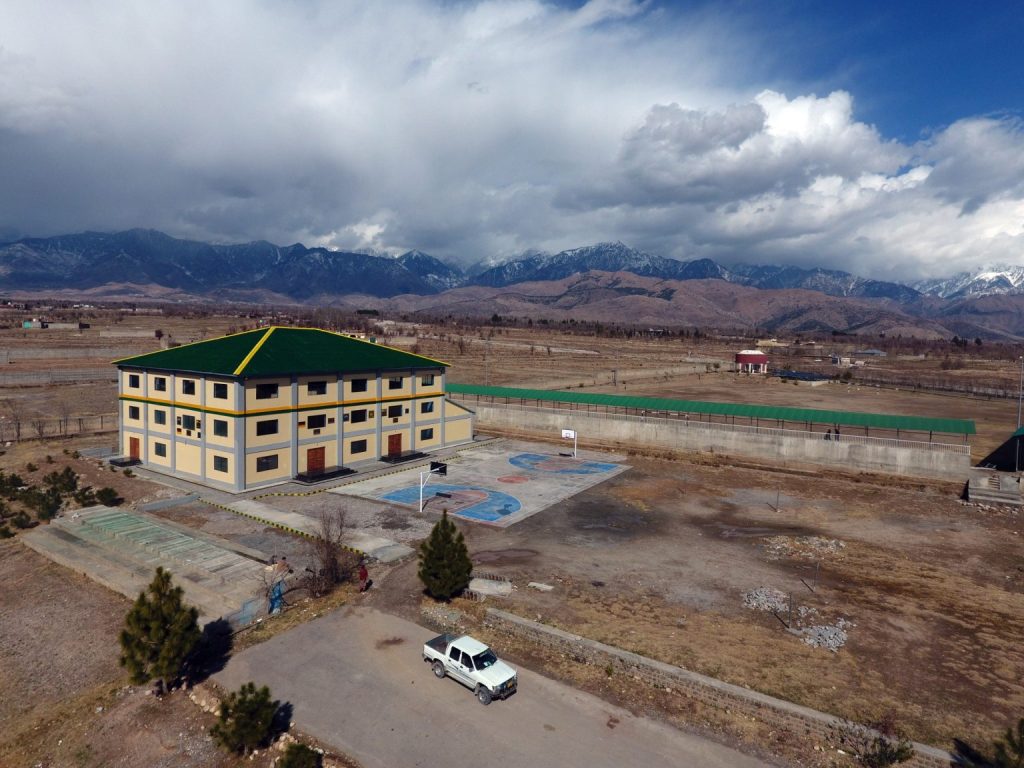
Youth sports facility in ParaChinar, Kurram district.
We have also strengthened livelihoods by establishing markets near border areas and improving connectivity. Over 57 kilometres of roads and five bridges have connected isolated villages to essential services and economic opportunities.
I recall standing in a remote village in Chitral, watching people use a newly constructed road for the first time. What once required hours of dangerous travel had become safe and accessible. For the community, it was not just infrastructure—it was a lifeline.
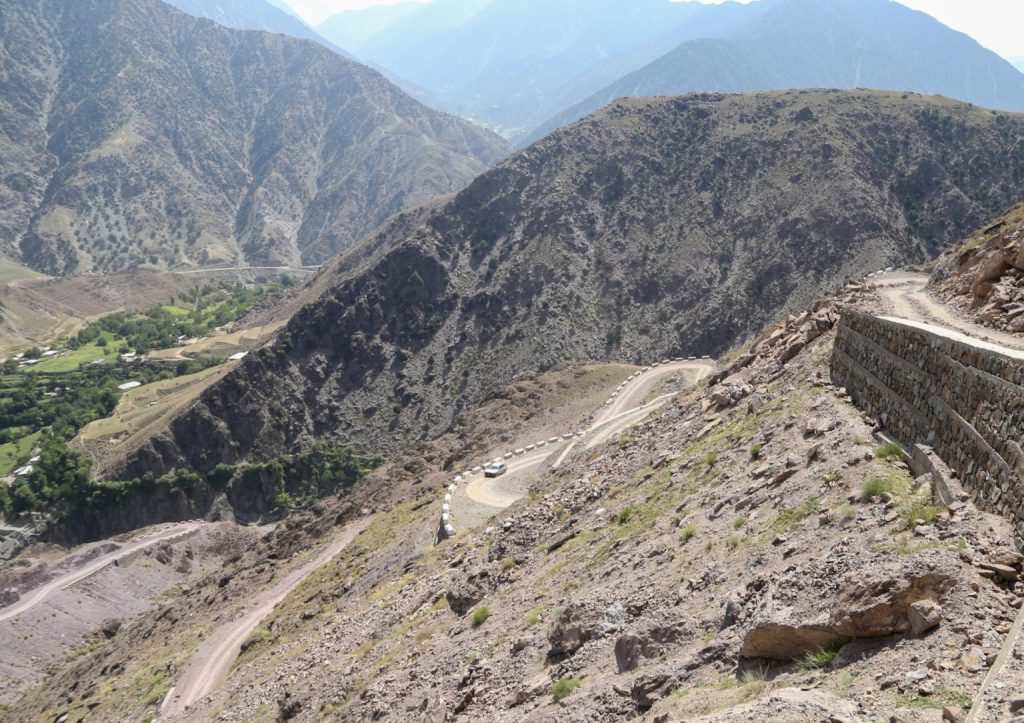
A 6.7 km road constructed in Nagar-Ursoon, Chitral district.
More recently, I have been entrusted with managing a clean energy initiative in mountainous regions. Under this program, seven hydropower plants are now operational across three districts, benefiting more than 8,000 households through a social enterprise model. These systems provide reliable, affordable and environmentally sustainable energy to communities that once lived in darkness.
In one village, I met a young girl named Amina. Before the hydropower system, “our evenings were spent in dim kerosene light, making it difficult to study”, she said. “When our home was connected to electricity, everything changed. I could study comfortably at night, my school performance improved and I now dream of becoming a teacher. My mother also began using electric appliances to support a small home-based business, contributing to the family’s income.”
Standing there, I realised that access to energy is not just about light—it is about opportunity, dignity and hope.
However, this work comes with challenges. These hydropower systems are located in high-altitude, disaster-prone areas. Floods and natural hazards frequently damage infrastructure and disrupt services. I have seen how a single disaster can undo months of progress, leaving communities vulnerable.
In a context of limited financial resources and economic constraints, responding to such crises is difficult. Yet these challenges have strengthened my resolve. They remind me that development is not a one-time effort—it requires persistence, adaptability and long-term commitment.
Our work has now reached over 500,000 people. But what matters most to me are the individual stories—the students who can now attend school, the youth who have safe spaces to grow, the families with access to healthcare and clean water, the women who have found their voice, and communities like Amina’s, where a single connection to electricity has transformed lives.
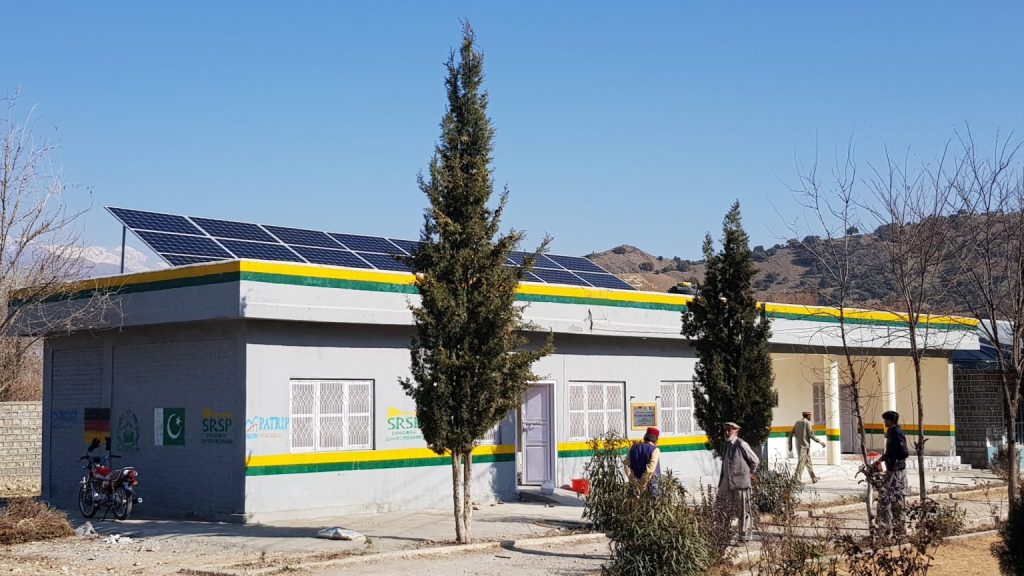
A health unit serving Shalozan in Kurram district.
Throughout my journey at SRSP, the foundation built during my Australia Awards experience has remained central. The knowledge, exposure and confidence I gained in Australia continue to guide my leadership and decisions. My Australian experience taught me that development is not just about delivering projects—it is about empowering people, listening to communities and creating sustainable change.
Looking back, I see how one opportunity—the chance to study in Australia—has created a ripple effect, touching thousands of lives. This is the true impact of Australia Awards: not just transforming individuals, but enabling them to transform communities.