

Alumnus building entrepreneurial ecosystems for inclusive growth in Pakistan
Posted: 9 November 2026
This year marks the 75th anniversary of Australian Government scholarships for students from the Asia-Pacific region, with the first scholarship recipients travelling to Australia under the Colombo Plan in 1951. To commemorate this significant milestone, Australia Awards – South Asia & Mongolia launched the Alumni Impact Storytelling Competition to celebrate the outstanding contributions alumni have made to the development of their countries.
The competition invited alumni to showcase the impact they have created and reflect on how their Australia Awards experience has helped shape their personal and professional journeys.
Pakistani alumnus Dr Ikhtiar Ahmed Khoso’s entry (below) placed in the ‘Commended’ category of the competition for its compelling account of strengthening entrepreneurship support systems for young people in Pakistan. Dr Khoso completed an Australia Awards Short Course on Business Incubation Management in 2025. His submission highlighted the importance of creating the conditions that allow innovation to thrive, from business incubation and startup financing to skills development and industry partnerships. Judges recognised how Australia Awards learning helped him shape a nationally recognised incubation centre supporting thousands of aspiring entrepreneurs.
A young person once approached me after a training session in rural Sindh and said, “Sir, I have an idea, but I don’t know where to go.” That moment stayed with me not because it was unusual, but because it was painfully common.
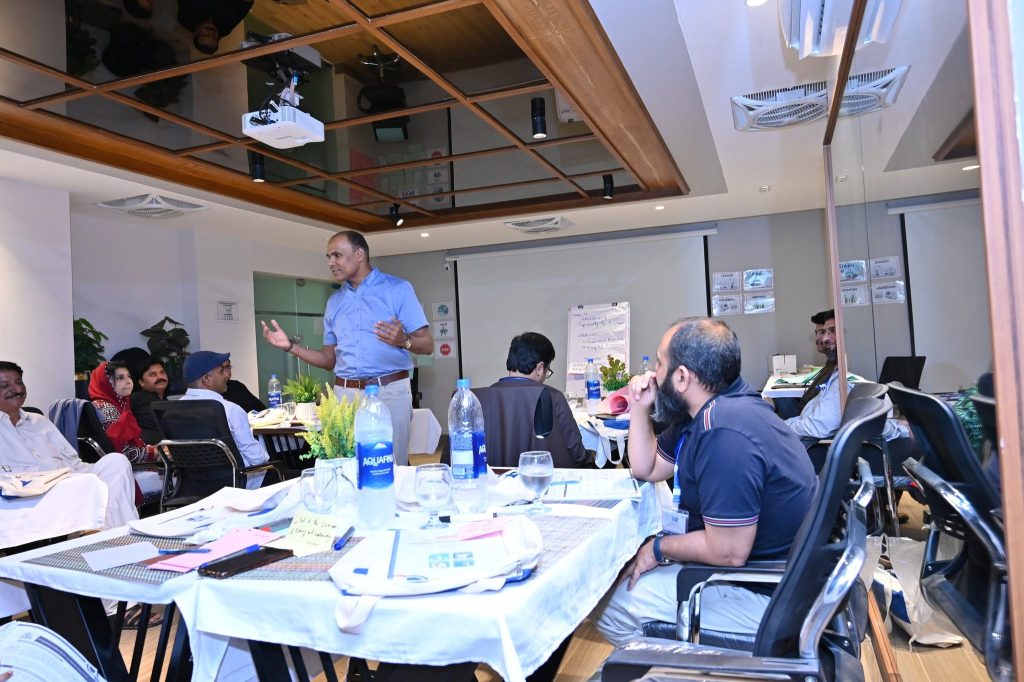
Dr Khoso training students at Sukkur IBA University.
In Pakistan, thousands of young people have ideas, but very few have access to the systems needed to turn those ideas into sustainable businesses. This gap is not just about opportunity; it is about fragmented ecosystems, limited access to finance and a lack of structured support, especially for young people in underserved regions. Over the past two decades, working in entrepreneurship, incubation, small and medium enterprise development, and skills training, I have seen immense potential but also the systemic barriers that prevent it from flourishing.
As Director of the Centre for Entrepreneurial Leadership and Incubation (CEL&Inc.) at Sukkur IBA University, I have been committed to addressing this challenge. Earlier in my journey, however, I realised that isolated interventions, training sessions, workshops or short-term programs were not enough. I recall a moment when several promising start-up ideas failed to progress, not for lack of talent, but because there was no structured incubation support or access to finance. That was the turning point when I understood: the problem was not individuals; it was the system around them.
A defining shift in my approach came through Australia Awards, particularly my training in Business Incubation Management at the University of Queensland and other subsequent business incubation visits in Australia. This experience fundamentally transformed how I understood entrepreneurship development. I was exposed to globally benchmarked incubation models, ecosystem-driven thinking, and structured approaches that connected academia, industry and finance. This changed my perspective from delivering programs to designing systems that enable sustainable impact.
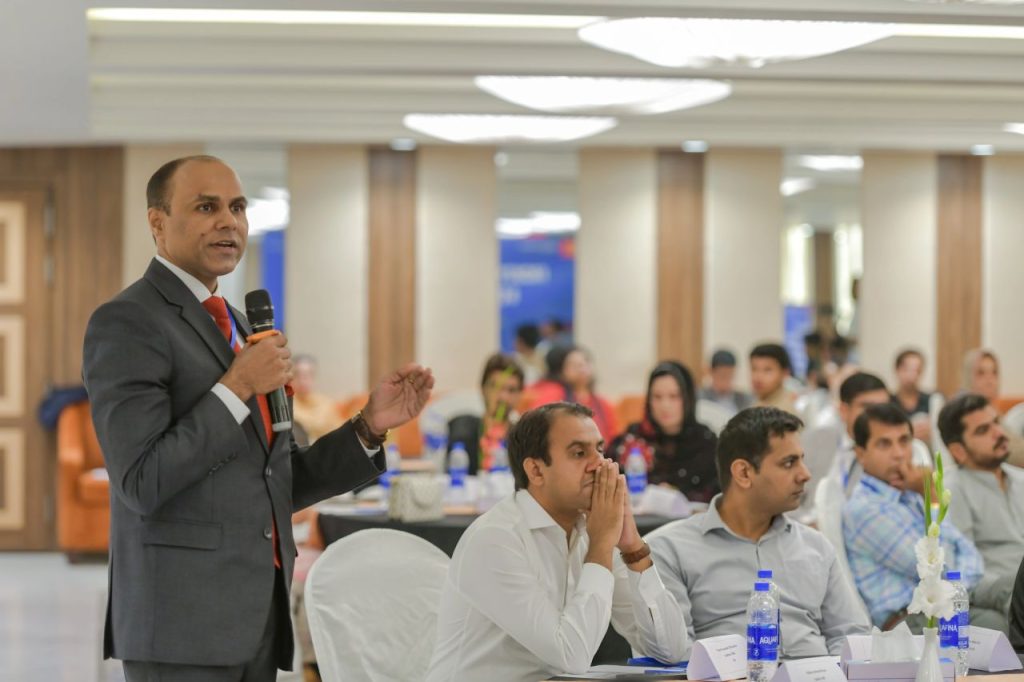
Dr Khoso (standing) delivering a training for the United Nations Office on Drugs and Crime Pakistan staff members.
Returning to Pakistan, I translated this learning into action by transforming CEL&Inc.’s incubation model. We moved towards a structured, performance-oriented incubation framework aligned with international best practices. We strengthened industry linkages to ensure startups were market-driven, introduced measurable milestones for accountability and actively facilitated access to startup financing by bridging one of the ecosystem’s most critical gaps.
One of the most significant outcomes of this transformation was securing the ‘W’ Category, the highest national ranking from the Higher Education Commission, for CEL&Inc. for consecutive years. This recognition reflects not only institutional excellence but also the successful adaptation of global incubation models to local realities, directly influenced by my Australia Awards experience.
The impact has been both measurable and meaningful. We have mentored over 5,800 aspiring entrepreneurs and incubated nearly 270 startups; conducted 116 workshops, bootcamps, seminars and trainings for 6,573 participants; and trained the digital and soft skills of 2,181 youths. These initiatives facilitated more than PKR325 million in investment and generated over 900 employment opportunities. More importantly, they secured PKR15 million of seed funding for aspiring entrepreneurs. We have also helped shift mindsets, where entrepreneurship is increasingly seen as a viable pathway for economic empowerment among the youth.
Our work contributes directly to global development priorities, particularly Sustainable Development Goal (SDG) 4 (Quality Education) by embedding entrepreneurial learning, SDG 8 (Decent Work and Economic Growth) through job creation, SDG 9 (Industry, Innovation and Infrastructure) by strengthening innovation ecosystems, and SDG 5 (Gender Equality) through targeted support for women entrepreneurs.
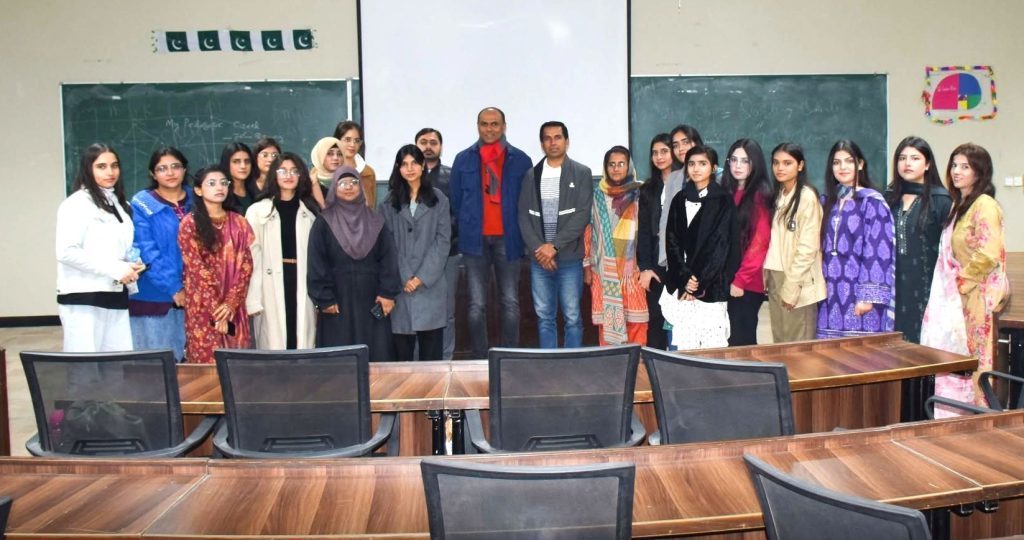
Dr Khoso (middle) pictured with students from BNB Women University during their visit to Sukkur IBA University.
Beyond institutional boundaries, we have extended our impact to underserved communities through bootcamps, training programs, and collaborations with national and international partners. These efforts have ensured that entrepreneurship is not confined to major cities but reaches those who need it the most, specifically in underprivileged regions.
However, the journey is far from complete.
Building on my Australia Awards experience and ongoing research in entrepreneurial finance and related disciplines (which has produced 35 published articles), I now aim to scale this impact at a national and international level. My vision is to develop an integrated entrepreneurial ecosystem in Pakistan, where incubation, finance, policy and skills development operate in alignment. This includes expanding incubation services to district-level institutions, improving access to startup financing through innovative mechanisms, and leveraging technology to create transparent, accessible and efficient support systems.
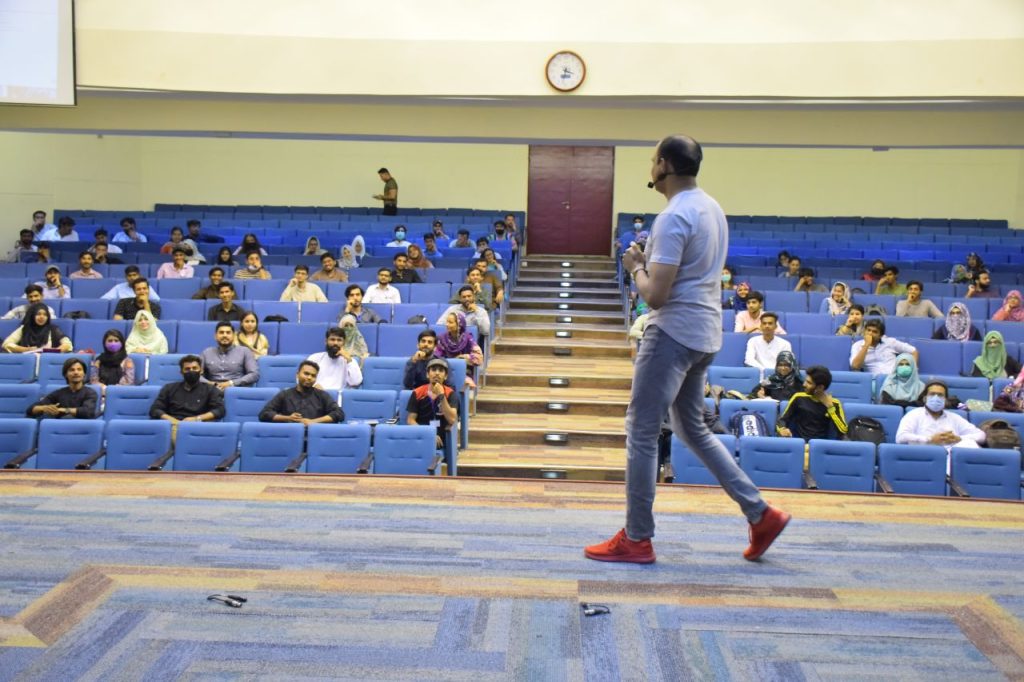
Dr Khoso training students on ‘Crafting a job winning resume’ at Sukkur IBA university.
The Australia Awards experience did more than enhance my capabilities. It reshaped my purpose. It enabled me to move from managing initiatives to enabling systems, from supporting individuals to transforming ecosystems.
Because, in the end, impact is not measured by how many programs we run but by how many lives we change.
And my vision is clear: A Pakistan where no young person with an idea is left asking where to go, but instead is supported by a system designed to help them succeed.